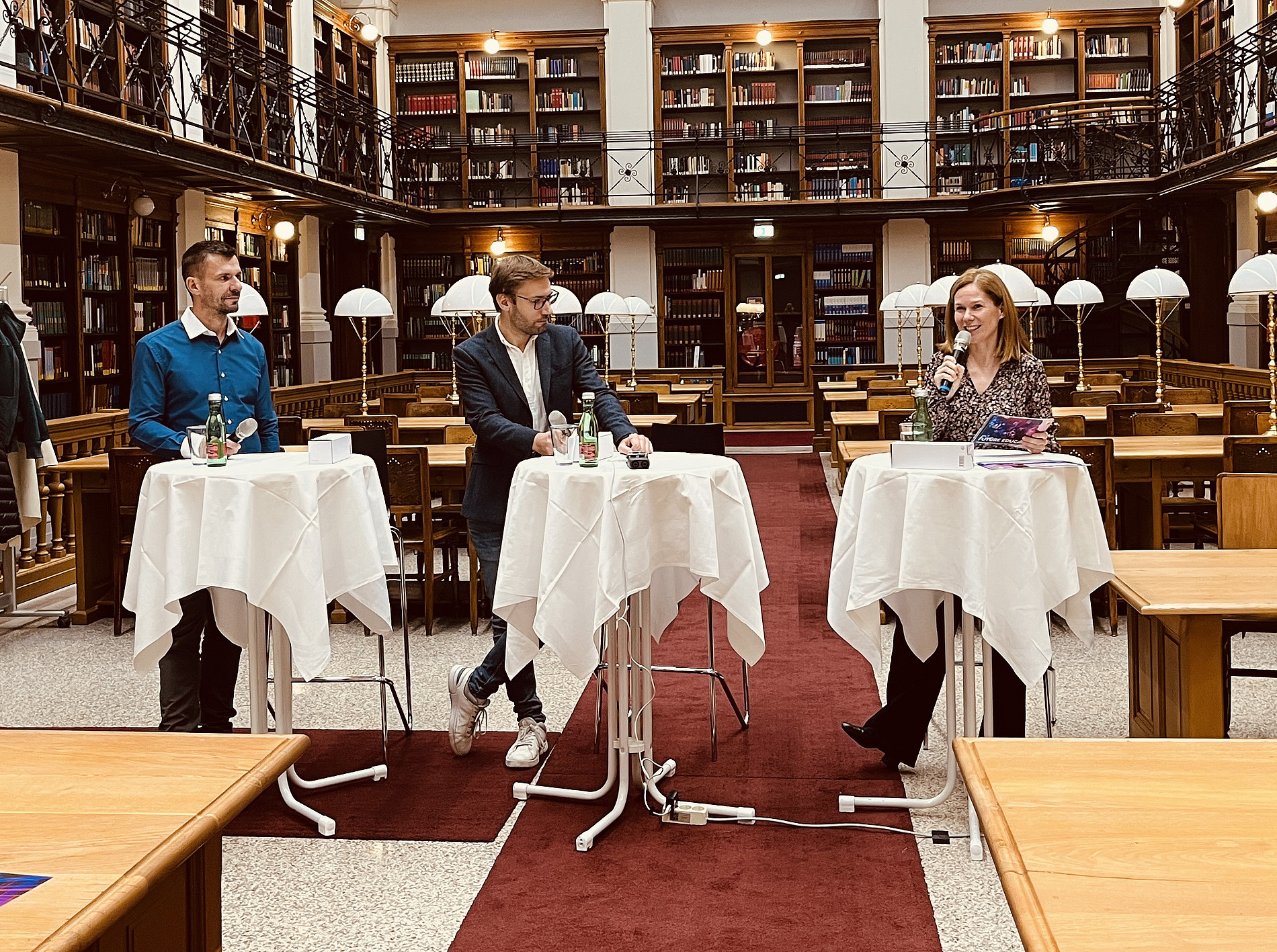
Talks are organised on current topics from the field of education that affect and move researchers, educational partners and people interested in education in their professional and private lives. In these talks, we want to shed light on specific challenges in the field of education from different disciplinary perspectives in order to better understand phenomena and develop interdisciplinary solutions. The audience is invited to enter into a dialogue with the experts, ask questions and discuss points of view from different perspectives.
The event is free of charge. Please register via the online form! Thank you!
FUTURE EDUCATION TALK 1: How to inspire young people to trust science
Thursday, 22 October 2026, 5–6 pm
Main Reading Room of the University Library of Graz (Universitätsplatz 3a, ground floor, 8010 Graz)
Panellists:
- Hildrun Walter, researcher in science communication, University of Graz
- Muhammed Akbulut, writing scholar, University of Graz
Moderator: Sonja Peitler-Hasewend
Young people are confronted with fake news in their daily lives, which aims to mislead or influence them. This form of misinformation is also often used to undermine trust in scientific findings. In this talk, we will discuss how to strengthen the trust of young people in science through different didactic and scientific approaches. The following questions will be discussed: How can young people be inspired to engage with science? How can science be opened up to their active participation? And how can the criteria of good scientific practice be conveyed in a way that is accessible to young people?
FUTURE EDUCATION Talk 2: The impact of new technologies on creativity
Wednesday, 25 November 2026, 5–6 pm
Main Reading Room of Graz University Library (Universitätsplatz 3a, ground floor, 8010 Graz)
Panellists:
- Mathias Benedek, creativity researcher, University of Graz
- Mathias Krammer, inclusion educator, University College of Teacher Education Styria
Moderator: Maria Stradner
Creativity is considered one of the most important human traits, offering us the opportunity to develop and actively shape our lives. New technologies such as social media, apps and artificial intelligence are fundamentally changing the way we think, work and express ourselves creatively, both in everyday life and at school. But when do these technologies foster creativity, and when do they undermine it? Is AI itself creative, or does it merely imitate human creativity? How can new forms of creativity look in the digital age? And what opportunities and risks does this present for schools and pupils?
FUTURE EDUCATION Talk 3: How financial education can be designed
Thursday, 18 March 2027, 5–6 pm
Main Reading Room of the University Library of Graz (Universitätsplatz 3a, ground floor, 8010 Graz)
Panellists:
- Silvia Lipp, business education specialist, University of Graz
- Éva Kaczkó, vocational and business education specialist, University of Innsbruck
Moderator: Sonja Peitler-Hasewend
Financial education is often seen as the key to empowerment, responsibility and social participation, and is increasingly being formulated as a teaching objective. But what contribution can financial education actually make in terms of financial behaviour when knowledge, attitudes and behaviour often diverge? How does it provide guidance in situations of uncertainty, conflicting goals and complex decision-making environments? This talk considers different perspectives on financial education and discusses how these approaches influence didactic action. What role can reflection and critical thinking play in this? So, how can financial education be designed in this context?
Talk 4: The effect of digital media on young children
Wednesday, 12 May 2027, 5–6 pm
Main Reading Room of the University Library of Graz (Universitätsplatz 3a, ground floor, 8010 Graz)
Panellists:
- Lars Eichen, education researcher, University of Graz
- Astrid Wirth, psychologist, University of Vienna
Moderator: Maria Stradner
Digital media are an integral part of everyday life, yet their use among young children is often a subject of controversy. While digital media and video games can serve as innovative learning tools in later educational phases, the question of the risks to cognitive and social development arises for the period before school age. For example, what impact does screen time have on the language development and concentration of young children? How can parents and educators in a digitalised world strike the right balance between stimulation and protection? In this talk, experts discuss how early media use can be scientifically evaluated and how effective and practical solutions can be developed for family and educational settings.
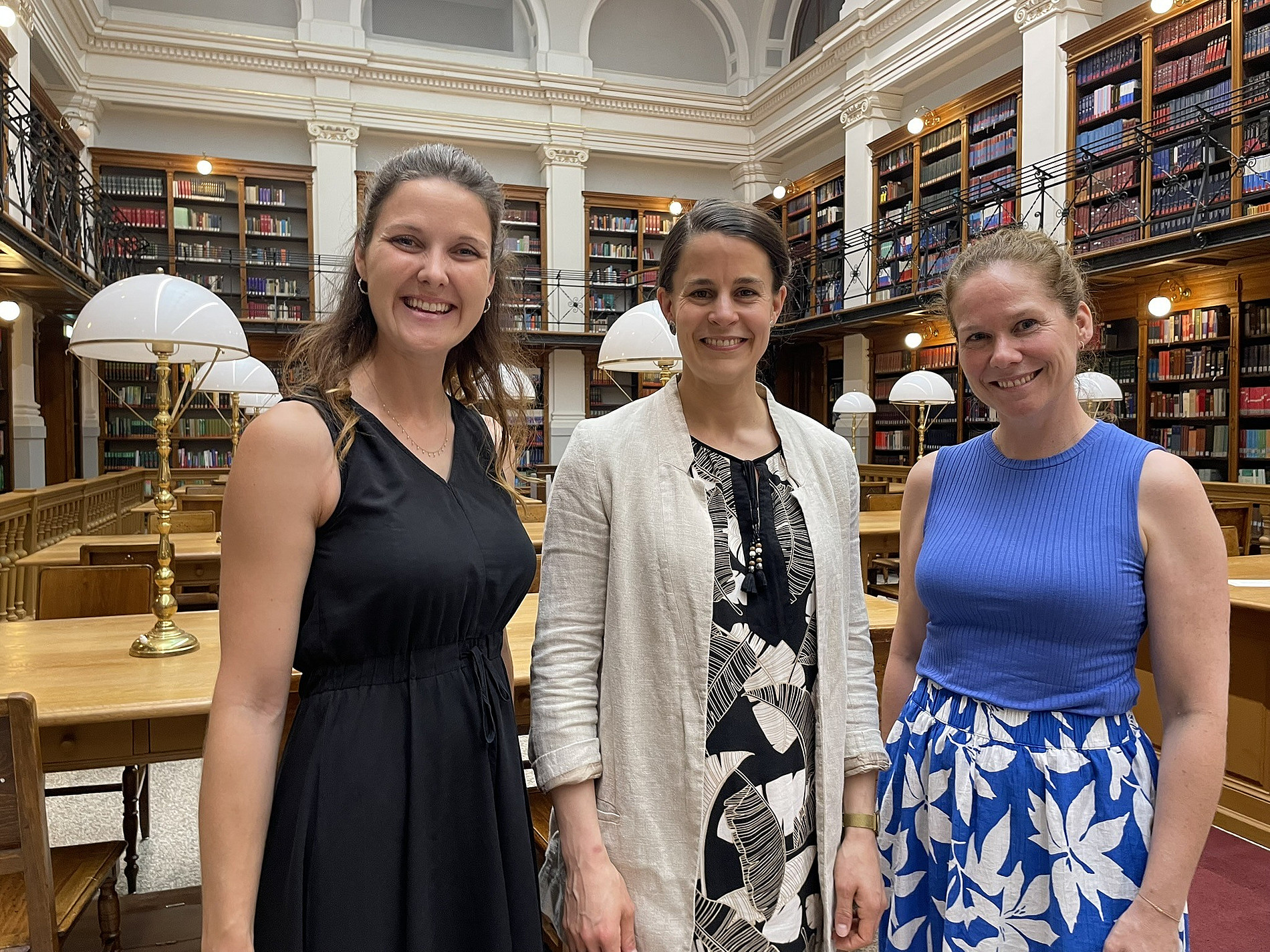
FUTURE EDUCATION Talk 4: "How young people can help shape research"
Wednesday, 27 May 2026, 5 - 6 pm, Main Reading Room of the Graz University Library
In discussion:
- Angelika Bernsteiner, Science didactician, University of Graz
- Lilith G. Rüschenpöhler, Chemistry Didactician, NTNU - Norwegian University of Science and Technology
Moderation: Sonja Peitler-Hasewend
Listen here: "How young people can help shape research"
Research involving young people is regarded as an exciting approach to fostering interest in and participation in science. But how can participation in research be successfully implemented in schools? And what forms of participatory research are there? In this talk, chemistry education specialist Lilith Rüschenpöhler and science education specialist Angelika Bernsteiner will discuss how young people can be actively involved in research processes through Citizen Science and Youth Participatory Science. The focus is on the following questions: What makes research relevant to young people? How can research be structured in the classroom so that it is not only academically sound but also genuinely participatory? What role do young people’s interests and lived experiences play? And how can research and learning be linked?
FUTURE EDUCATION Talk 3: "How new technologies are changing learning and performance"
Wednesday, 11 March 2026, 5 - 6 pm, Main Reading Room of the Graz University Library
In discussion:
- Aljoscha Neubauer, Psychologist, University of Graz
- Klaus Himpsl-Gutermann, Professional researcher, University College of Teacher Education Vienna
Moderation: Sonja Peitler-Hasewend
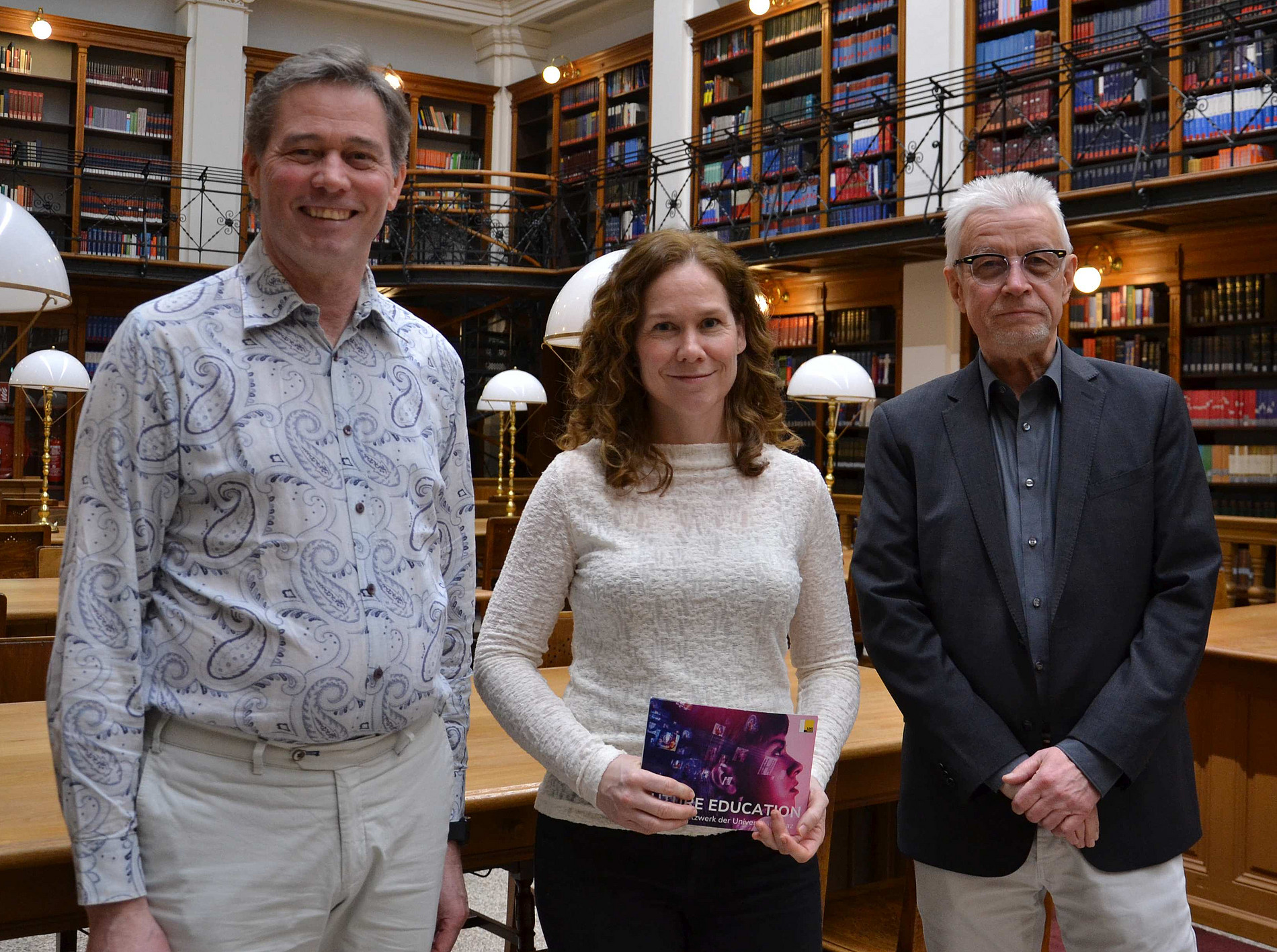
Listen here: "How new technologies are transforming learning and performance"
AI and generative AI are transforming both learning processes and the way we approach academic performance in schools and universities – particularly with regard to the design of examinations and academic writing. But how important are prompting skills? And what challenges do AI agent systems present – particularly in terms of their transparency and preparation for specific teaching scenarios? How will neuroenhancement techniques and transcranial electrical stimulation affect learning and performance? Psychologist Aljoscha Neubauer and professional researcher Klaus Himpsl-Gutermann discuss these issues in this talk.

FUTURE EDUCATION Talk 2: "How civic education can succeed in times of crisis"
Wednesday, 10 December 2025, 5 - 6 pm, Main Reading Room of Graz University Library (Universitätsplatz 3a/EG, 8010 Graz)
In discussion:
- Georg Marschnig, History didactician, University of Graz
- Robert Hummer, political didactician, Salzburg University of Education
Moderation: Sonja Peitler-Hasewend
Controversial political education is a central prerequisite for a functioning democracy. This is coming under increasing pressure - both as a way of life and as a system of rule - due to multiple crisis phenomena. What does it mean for political teaching and learning processes in schools when the foundations of democratic culture are increasingly being called into question? When conflicting opinions are no longer negotiated in constructive dialogue in view of the extreme polarisation of political disputes? When teachers are accused of manipulation when they deal with political issues in their lessons? The two history and political didactics experts Georg Marschnig and Robert Hummer address these and many other questions in this talk.
FUTURE EDUCATION Talk 1: "How video games support learning processes of the future"
Monday, 03 November 2025, 5 - 6 pm, Main Reading Room of the Graz University Library
The speakers will be:
- Manuel Ninaus, Psychologist, University of Graz
- Johanna Pirker, Computer Scientist, Graz University of Technology and Munich University of Technology
Moderation: Sonja Peitler-Hasewend
Video games are a popular leisure activity. At the same time, they can be innovative teaching and learning tools that are becoming increasingly important in education. At a time when artificial intelligence (AI) is taking over more and more tasks and important learning processes are sometimes not taking place as a result, it is crucial to clarify how video games function as teaching and learning tools. At best, they enable students to actively shape their learning processes and thus promote motivation - in addition to a critical examination of video games - instead of relying solely on AI-supported solutions. But how can video games be integrated well into lessons? What types of games are particularly suitable for this? And how can you recognise a high-quality educational game? Computer scientist Johanna Pirker and psychologist Manuel Ninaus address these and other questions in this talk.
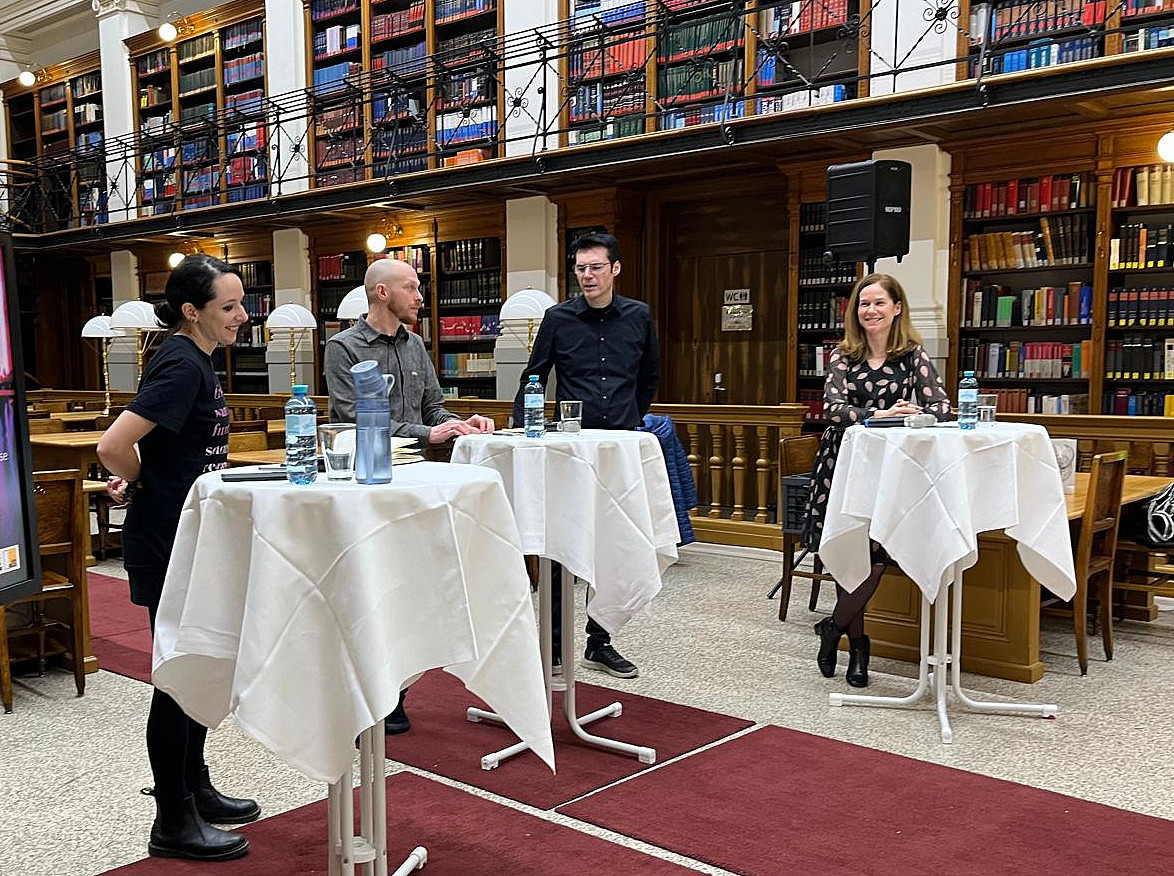
Listen again – Talk 1: "How video games support the learning processes of the future"
Video games are a popular leisure activity. At the same time, they can serve as innovative teaching and learning tools that are becoming increasingly important in the education sector. At a time when artificial intelligence (AI) is taking on more and more tasks, thereby preventing certain key learning processes from taking place, it is crucial to highlight how video games function as teaching and learning tools. At their best, they enable pupils to actively shape their own learning processes and, in doing so – alongside a critical engagement with video games – foster motivation rather than relying solely on AI-supported solutions. But how can video games be effectively integrated into the classroom? Which types of games are particularly well suited to this? And how can you recognise a high-quality educational game? Computer scientist Johanna Pirker and psychologist Manuel Ninaus address these and other questions in this talk.
FUTURE EDUCATION Talk 3: "How participation can succeed in the classroom"
Wednesday, April 2, 2025, 5-6 pm, Main Reading Room of the Graz University Library
In discussion:
- Lisa Paleczek, expert for inclusive education and psychology, University of Graz
- Sebastian Ruin, expert in movement and sports education, University of Graz
Moderation: Sonja Peitler-Hasewend
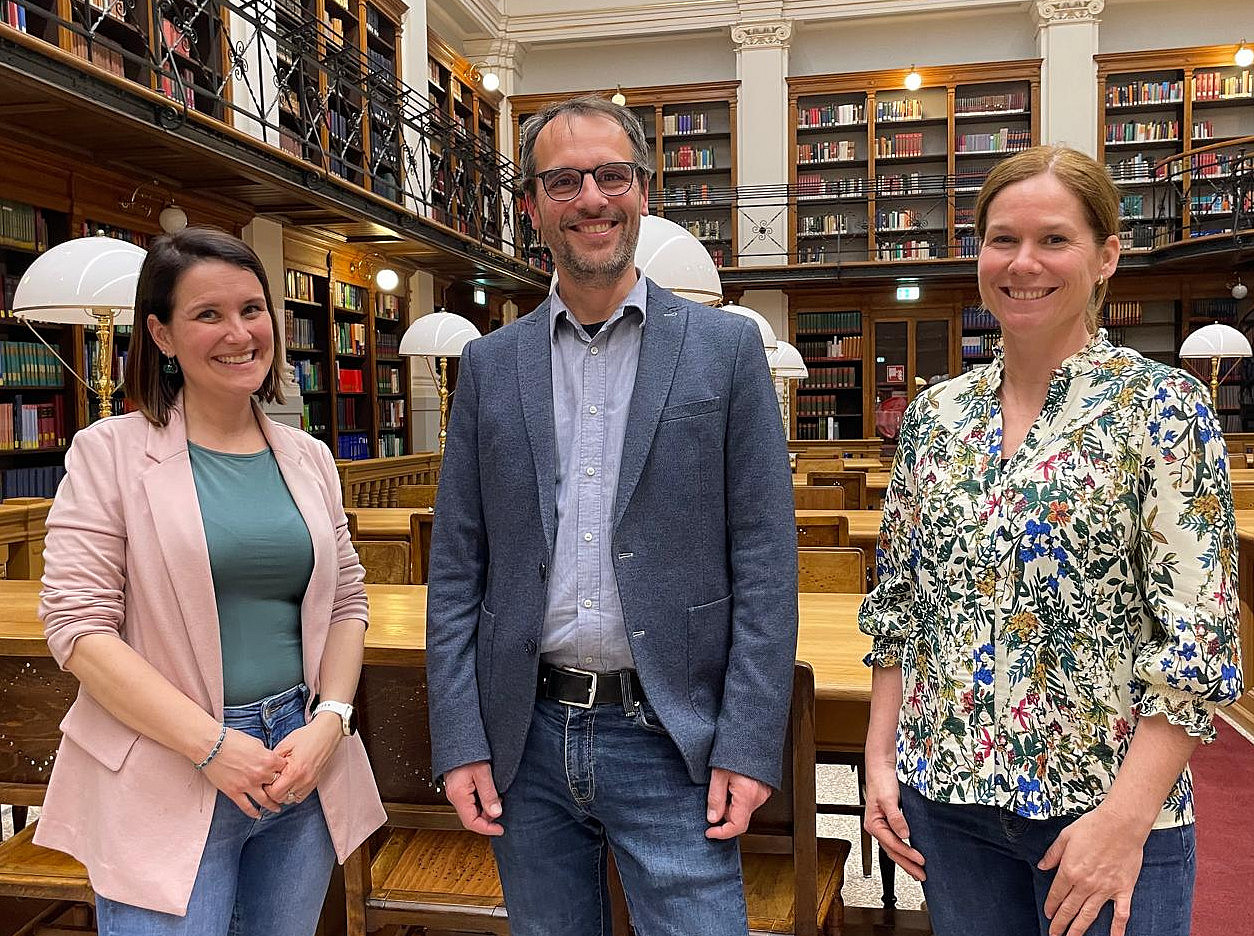
Listen to it again: Talk 3 - "How participation can succeed in the classroom"
Which dimensions of diversity are represented in our classes? What is relevant for teachers to be able to design lessons for all (inclusive lessons)? How can pupils' voices be taken into account when it comes to inclusive teaching and learning? Is school sport a place for discrimination? What does research know about this? What role does the body play in these contexts? Is diversity, to a certain extent, anchored in the body? What are the greatest challenges for the realisation of inclusive demands in the subject of physical activity and sport? Lisa Paleczek, an expert in inclusive education and psychology, and Sebastian Ruin, an expert in movement and sports education, addressed these and many other questions in Talk 3.
FUTURE EDUCATION Talk 2: "How our brain learns to calculate"
Wednesday, January 22, 2025, 5-6 pm, Main Reading Room of the Graz University Library
In discussion:
- Stephan Vogel,Cognitive neuroscientist and psychologist, University of Graz
- Karl-Heinz Graß, mathematician and subject didactician, University College of Teacher Education Styria
Moderation: Sonja Peitler-Hasewend
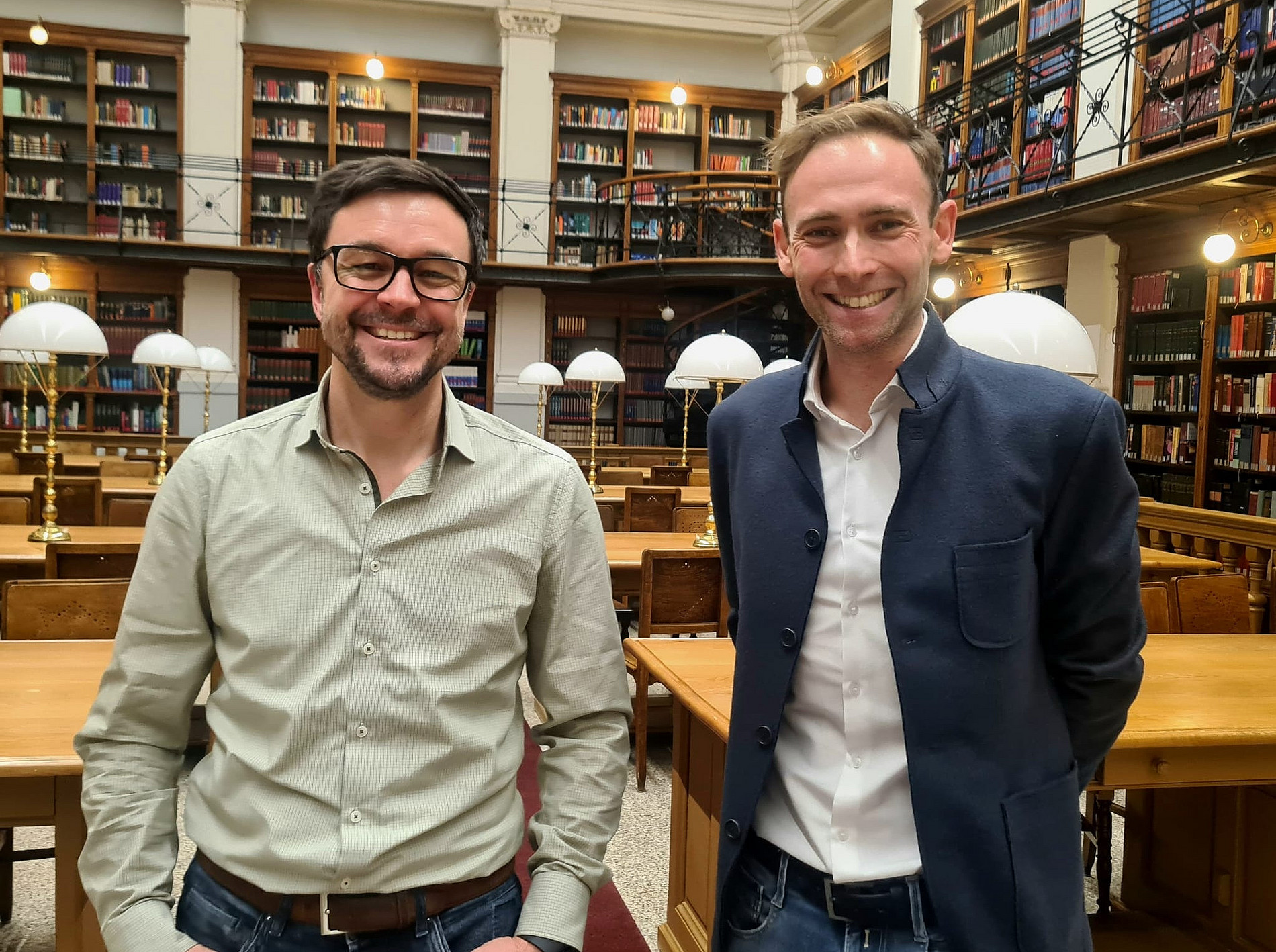
Listen to it again: Talk 2 - "How our brain learns to calculate"
How are certain areas of the brain responsible for understanding numbers and arithmetic? To what extent does learning mathematical concepts and intensively practising arithmetic tasks change neuronal structures and functions in the brain? Why do some people find it easier to learn arithmetic? And what influence do neuroscientific research findings have on maths teaching? Neuroscientist Stephan Vogel and mathematician and didactician Karl-Heinz Graß address these and many other questions in this talk.
FUTURE EDUCATION Talk 1: "How young people can protect themselves against fake news"
Monday, October 14, 5-6 p.m., Main Reading Room of the Graz University Library
In discussion:
- Stephan Schicker, language didactician, University of Graz
- Thomas Schubatzky, physics didactician, University of Innsbruck
Moderation: Sonja Peitler-Hasewend
The spread of misinformation is considered to be one of the greatest short-term threats worldwide. From an educational perspective, the question therefore arises as to how best to prepare learners to deal with misinformation. Didactic experts from various disciplines are addressing the following questions, among others: How can young people be sensitized to misinformation? How can strategies for checking and refuting false information best be taught? How can learners be "immunized" against fake news? The two panelists will try to find answers to these questions in this talk.