"Interdisciplinary Research Perspectives": That was the FUTURE EDUCATION Conference 2026
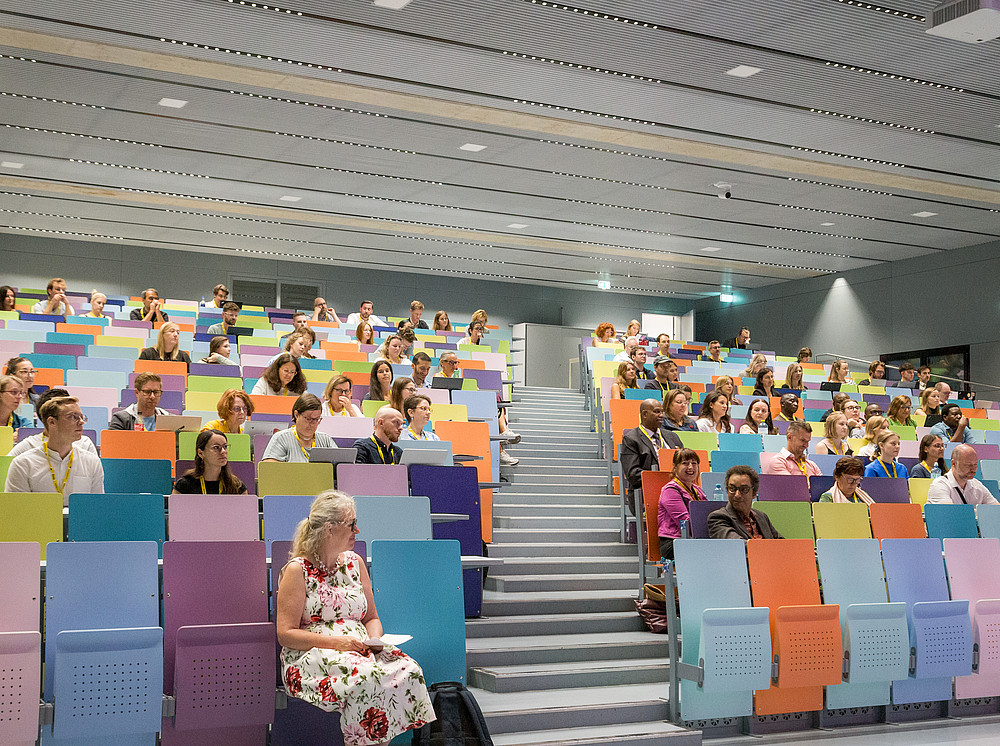
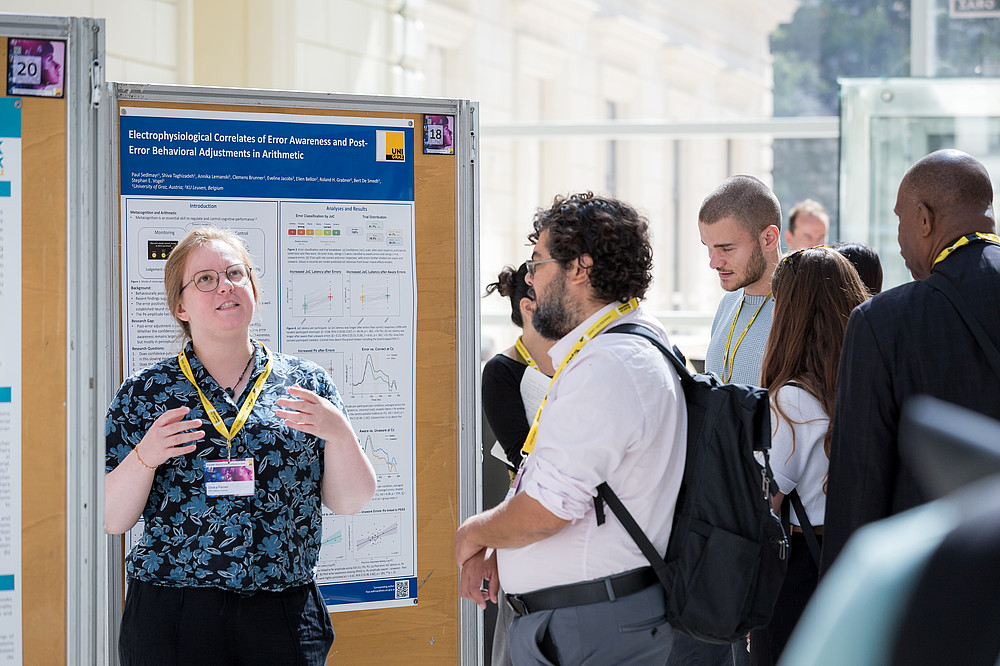
What happens when different disciplines come together to look at the future of education? Under the theme ‘Interdisciplinary Research Perspectives’, the FUTURE EDUCATION Conference 2026 at the University of Graz brought together 214 participants from 25 countries. Five international keynote speeches and 124 contributions (presentations, symposia and poster presentations) covering the areas of plurality and diversity in educational processes, languages as a tool for social participation, and educational technology(ies): interdisciplinary, innovative, disruptive and STEM+ for the sustainable development of our society – highlighted over the course of three days just how diversely ‘Future Education’ can be conceived and researched – and how productive the exchange across disciplinary and cluster boundaries is.
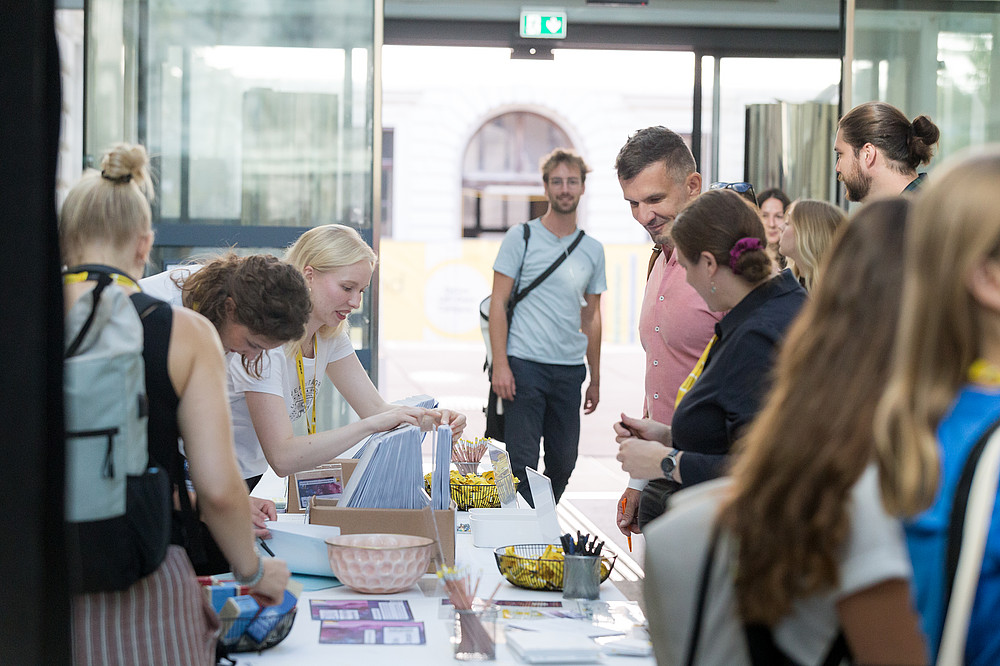
From 1 to 3 September 2026, the University of Graz hosted a three-day event dedicated to interdisciplinary educational research. The FUTURE EDUCATION Conference 2026 – Interdisciplinary Research Perspectives (FEC 2026) brought together researchers from different disciplines, countries and career stages, providing a forum for current research, in-depth discussions and new academic connections.
With 214 participants from 25 nations and 129 papers, the conference not only demonstrated the breadth of current educational research. Above all, it highlighted just how much can be achieved when different academic perspectives engage in dialogue. Research lectures, symposia and poster presentations showcased research findings, whilst numerous opportunities for formal and informal exchange – such as yoga on campus or the Science Lunch Date – encouraged participants to explore ideas further and initiate new collaborations.
The conference theme, ‘Interdisciplinary Research Perspectives’, was far more than just a headline. It ran through all three days of the conference: What skills do learners need in an increasingly complex, digital and pluralistic society? What role do language, literacy, creativity and critical thinking play? How can educational technologies support learning? How can the different backgrounds of learners be taken into account? How are artificial intelligence and other digital technologies transforming educational processes? And how can subject-specific and cross-curricular perspectives be brought together?
It was precisely this diversity that characterised FEC 2026. ‘Future Education’ was not understood as a single field of research, but as a shared space for thought and research.
Five keynote speeches – five perspectives on the future of education
Five international keynote speeches provided a special backdrop to the three days of the conference. They offered different perspectives on current and future educational issues, whilst also highlighting how closely many of these challenges are interlinked.
Stéphan Vincent-Lancrin (OECD) kicked off the proceedings with ‘Fostering Critical Thinking and Creativity – A Way to Improve Education’. Critical thinking and creativity are often at the heart of discussions about skills for the future. Stéphan Vincent-Lancrin focused on the question of how both can actually be fostered in the classroom – specifically within traditional school subjects. At the same time, he demonstrated that technology can both support this and create new challenges. This very first keynote address thus immediately took up the conference’s interdisciplinary guiding principle: critical thinking and creativity are not the preserve of individual subjects, but require exchange between disciplines and research approaches.
Margaret Snowling (University of Oxford) then turned the spotlight on language, literacy and reading. Her keynote address, ‘Language, Literacy and Learning to Read’, focused on the fundamental prerequisites of educational processes. Language and reading are not merely subjects of school-based learning, but central foundations for learning and social participation. The keynote thus also formed a link to numerous conference papers that dealt with language, multilingualism, the development of written language and the varying backgrounds of learners.
Katharina Scheiter (University of Potsdam), in her keynote ‘Using Educational Technology to Facilitate and Enhance Science Education’, turned her attention to educational technologies and their potential for science learning. Her keynote thus centred on a question that is particularly relevant in light of technological developments: under what conditions does technology actually support learning? Digital media open up new possibilities for visualisation, interaction and support; however, their educational value does not arise solely from their availability. Rather, there is a need for evidence-based design of learning environments in which technological possibilities are combined with insights into learning and teaching.
Frank C. Worrell (University of California, Berkeley) offered a further perspective with ‘The Future of Learning: Tailoring Educational Approaches to Individual Backgrounds’. His keynote address focused on the diverse backgrounds and circumstances of learners. Accordingly, future-oriented education must ask not only what is to be learnt, but also how learning environments can be designed to take account of different starting points and open up opportunities for development. In doing so, the keynote address touched upon key issues of diversity, talent development and educational equity, themes which also ran through numerous contributions at the conference.
The conference concluded with a presentation by Constance Steinkuehler (University of California, Irvine) entitled ‘The Future of Games for Learning’. Her perspective on games went far beyond the frequently discussed issues of motivation and skills development. Games were also seen as spaces for collective thinking, action and negotiation. Against the backdrop of societal challenges such as disinformation and polarisation, the keynote thus also raised the question of the potential of games for critical judgement, shared understanding and social imagination.
Despite their diversity, the five keynote speeches formed a common framework: Future Education encompasses cognitive and linguistic foundations as well as technology, diversity, social responsibility, creativity and new forms of learning.
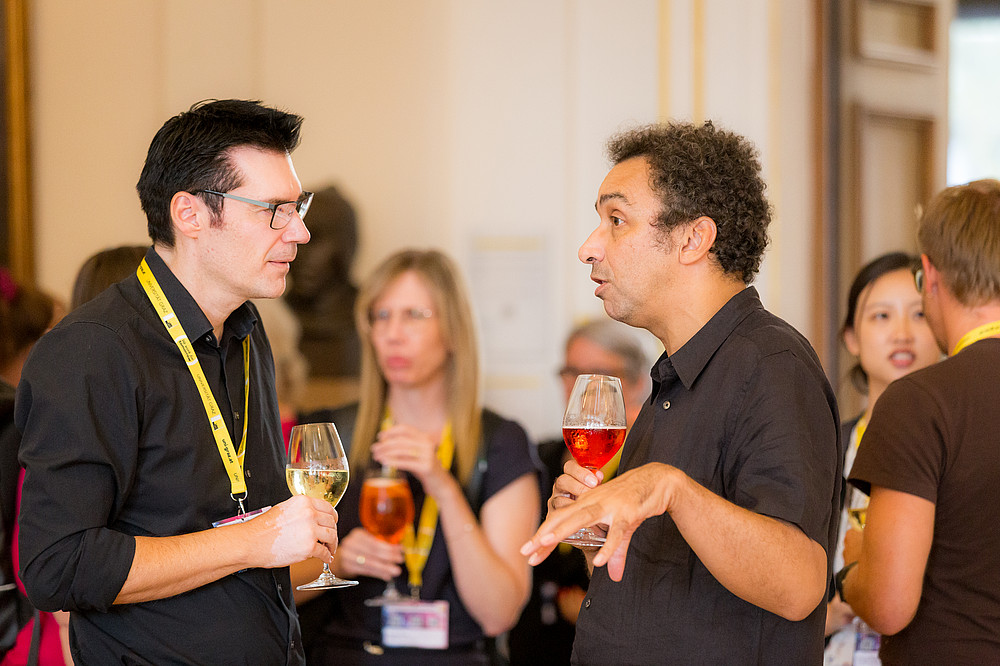
In her presentation *Using Educational Technology to Facilitate and Enhance Science Education*, Katharina Scheiter (University of Potsdam) turned her attention to educational technologies and their potential for science learning. Her keynote thus focused on a question that is particularly relevant in light of technological developments: under what conditions does technology actually support learning? Digital media open up new possibilities for visualisation, interaction and support; however, their educational value does not arise solely from their availability. Rather, there is a need for evidence-based design of learning environments in which technological possibilities are combined with insights into learning and teaching.
Frank C. Worrell (University of California, Berkeley) offered a further perspective with ‘The Future of Learning: Tailoring Educational Approaches to Individual Backgrounds’. His keynote address focused on the diverse backgrounds and circumstances of learners. Accordingly, future-oriented education must ask not only what is to be learnt, but also how learning environments can be designed to take account of different starting points and open up opportunities for development. In doing so, the keynote address touched upon key issues of diversity, talent development and educational equity, themes that also ran through numerous contributions at the conference.
The conference concluded with a presentation by Constance Steinkuehler (University of California, Irvine) entitled ‘The Future of Games for Learning’. Her perspective on games extended far beyond the frequently discussed issues of motivation and skills development. Games were also seen as spaces for collective thinking, action and negotiation. Against the backdrop of societal challenges such as disinformation and polarisation, the keynote thus also raised the question of the potential of games for critical judgement, shared understanding and social imagination.
Despite their diversity, the five keynote speeches formed a common framework: Future Education encompasses cognitive and linguistic foundations as well as technology, diversity, social responsibility, creativity and new forms of learning.
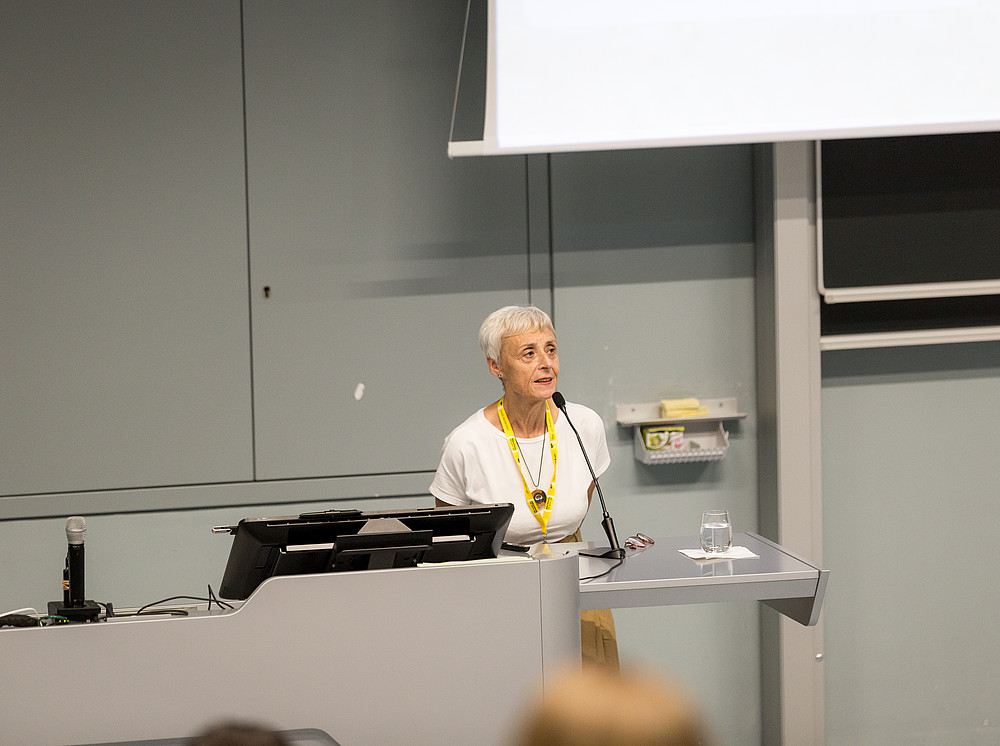
Interdisciplinary Research Perspectives: when clusters become connections
The diversity of the contributions was reflected in the four research clusters of the FUTURE EDUCATION network: Plurality and Diversity in Educational Processes; Languages as a Tool for Social Participation; Educational Technology(ies): Interdisciplinary, Innovative, Disruptive; and STEM+ for the Sustainable Development of our Society. The clusters provided a framework for the extensive programme, but were by no means intended to be viewed as separate areas. It became particularly clear over the course of the three days that the four clusters represented not so much boundaries as starting points for interdisciplinary exchange. Numerous sessions were explicitly assigned to more than one cluster. The various areas were deliberately conceived as interconnected within the programme. It was precisely in this that the conference theme, ‘Interdisciplinary Research Perspectives’, became tangible: the result was not simply four parallel areas of research. Rather, a shared research space emerged in which research questions, theoretical perspectives and methodological approaches converged.
Consequently, ‘Future Education’ was not understood as a prediction of what education might look like at some point in the future. Rather, the future of education emerged as something that is already being shaped today through research, teaching, technological development and decisions on education policy.
More than just talks: spaces for discussion and networking
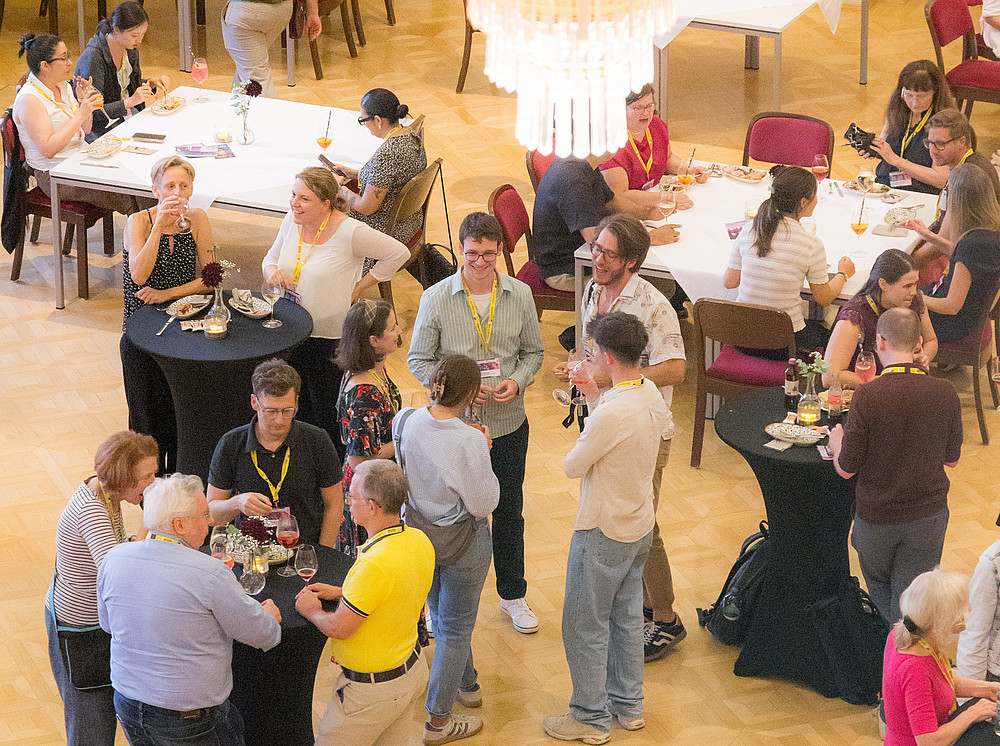
A conference is not defined solely by its scientific programme. One of the key aims of FEC 2026 was therefore to create opportunities for people to meet and exchange ideas beyond the individual sessions.
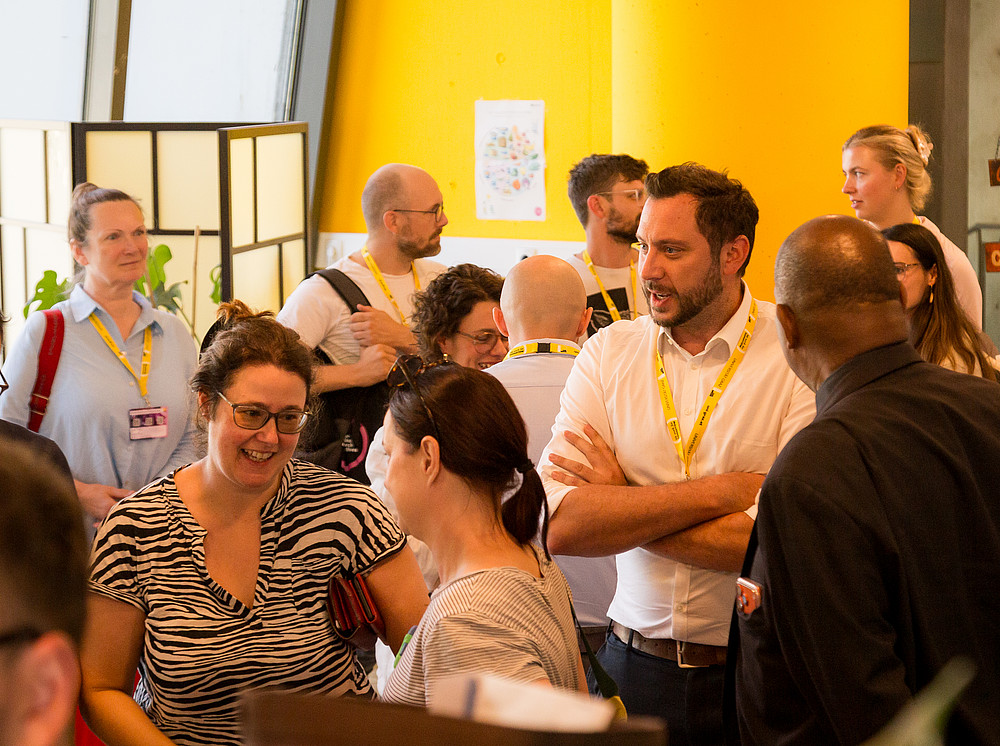
One special format designed for this purpose was the Science Lunch Date. Pairs of researchers were brought together for lunch – with the aim of exchanging knowledge and experiences, finding inspiration and building bridges between disciplines and generations of researchers. The Music Night, joint city tours and other informal programme items also provided opportunities to continue discussions from the sessions, discover new perspectives and make new contacts. It was precisely this combination of academic exchange and personal interaction that shaped the atmosphere of the conference. Amidst the keynotes, research lectures, symposia and poster presentations, conversations repeatedly arose that brought together topics from different perspectives.
After three intensive days of the conference, therefore, what remains is far more than just a wealth of research findings. The FUTURE EDUCATION Conference 2026 demonstrated just how productive it is to tackle educational issues collaboratively and across disciplinary boundaries. ‘Interdisciplinary Research Perspectives’ was therefore not merely the conference theme at FEC 2026, but was actively put into practice throughout the three days.
A heartfelt thank you goes to all the keynote speakers, presenters, poster authors, chairs, discussants and participants who contributed their research, their questions and their perspectives. We would also like to thank everyone who was involved in the organisation and running of the event, both on stage and behind the scenes, and who thus made FEC 2026 possible. Thank you for three intensive, inspiring and unifying days – and for the many interdisciplinary perspectives on the future of education.
Note on the use of AI: Generative AI was used in the creation of this article for linguistic editing and structuring – in particular to shorten the text – as it was difficult to condense so much inspiration into a single piece of writing.